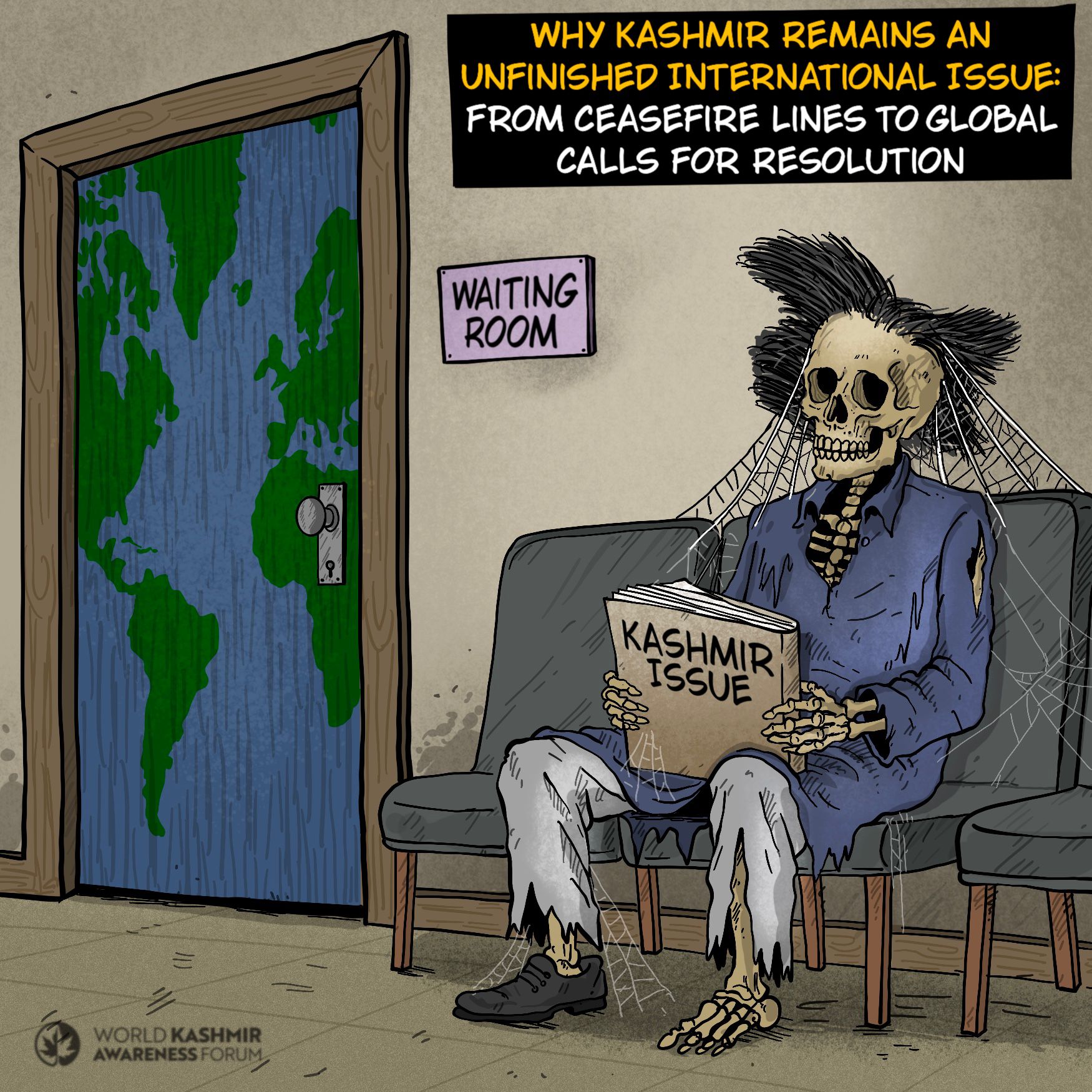
Why Kashmir Remains an Unfinished International Issue: From Ceasefire Lines to Global Calls for Resolution
To understand why this issue endures, one must look beyond modern political statements and trace the structural, historical milestones that have shaped its trajectory. The month of June, across various decades, has repeatedly served as a focal point for international intervention, legal codification, and diplomatic warnings regarding the valley. These moments highlight both the global recognition of Kashmir’s unique legal status and the systemic gap between international commitments and actual enforcement.
June Moments That Shaped the Kashmir Question
The international architecture governing the Kashmir dispute was not constructed overnight; it was built, and at times, reinforced, during critical diplomatic crossroads. Tracing these June milestones provides an analytical look at how the region became central to global security and human rights discussions.
June 1949: The Groundwork for the Ceasefire Line
By the summer of 1949, the United Nations Commission for India and Pakistan (UNCIP) was actively working on the ground to transition a fragile halt in hostilities into a formal agreement. Throughout June 1949, intense negotiations occurred under the shadow of UN Security Council Resolution 47, which mandated a free and impartial plebiscite to determine the future of the territory.
These June deliberations served as the immediate precursor to the historic Karachi Agreement signed in July 1949. During this period, international observers and military metrics were deployed to map out what would become the Ceasefire Line (later designated as the Line of Control). This milestone established a profound legal precedent: the line was never recognized as an international border, but rather as a temporary administrative demarcation monitored by the United Nations Military Observer Group (UNMOGIP). It solidified the fact that the territory’s final sovereignty remained undecided under international law.
June 1998: The Geneva Communiqué and Nuclearized Risk
The international dimensions of the conflict changed permanently in May 1998, when both India and Pakistan conducted nuclear tests, pushing South Asia into a dangerous nuclear standoff. The global response was immediate. On June 4, 1998, the foreign ministers of the five permanent members of the UN Security Council (the P5) met in Geneva to issue the Geneva Communiqué.
This document, which was subsequently formalized into UN Security Council Resolution 1172, explicitly identified the unresolved dispute over Jammu and Kashmir as the root cause of tensions between the two nuclear-armed neighbors. The Geneva Communiqué shattered New Delhi’s long-standing assertion that Kashmir was an internal matter. It served as a stark global recognition that the denial of political justice in Kashmir directly endangered international peace and security.
June 1999: The New York Times and Global Editorial Warnings
Exactly one year after the nuclear tests, the mini-war in the heights of Kargil in June 1999 forced the international press to confront the high cost of ignoring the Kashmiri population. During this period, influential global publications, including New York Times editorials, consistently warned that South Asia would remain on the brink of catastrophe as long as the underlying political grievances of the region were managed with military force rather than diplomatic justice. These editorial interventions documented a growing consensus among international analysts: the global community’s policy of treating Kashmir as a back-burner issue was a high-risk failure.
The Implementation Gap: Recognition vs. Enforcement
Why does Kashmir continue to surface in global diplomatic discussions despite decades of gridlock? The answer lies in the stark divergence between international legal recognition and actual implementation.
On paper, the international framework governing Kashmir is clear. The UN Security Council has passed more than a dozen resolutions affirming that the future of Jammu and Kashmir must be decided through a free and democratic plebiscite. Global human rights watchdogs, international legal bodies, and foreign parliaments regularly issue statements detailing severe restrictions on civil liberties, arbitrary detentions under draconian laws like the Unlawful Activities (Prevention) Act (UAPA), and systemic communication blackouts in the region.
However, a significant gap remains between the acknowledgment of these violations and any meaningful international action. Many Kashmiris argue that this lack of institutional accountability has effectively given Indian authorities a free pass to pursue security-driven policies that erode local freedoms. This institutional inaction has not only enabled the heavy militarization of the region but has paved the way for sweeping structural changes designed to alter the territory’s demographic makeup.
For the population living under these conditions, the prolonged silence of global enforcement mechanisms raises serious questions about the credibility of international law. When geopolitical alliances and economic interests outweigh the enforcement of UN resolutions, international law is perceived not as a shield for the vulnerable, but as a system of selective justice.
Beyond Bilateralism: Centering Kashmiri Agency
A major flaw in historical peace efforts has been the tendency of global powers to treat Kashmir as a bilateral real estate dispute between India and Pakistan. This perspective completely ignores the actual stakeholder: the Kashmiri people themselves.
Historical context proves that excluding local voices leads directly to diplomatic failure. For example, during the diplomatic openings of May and June 1997, high-level bilateral talks between India and Pakistan offered a temporary glimmer of hope for regional normalization. However, because those processes systematically excluded genuine Kashmiri representatives, they reinforced a pattern where the future of the population was debated without them having a seat at the table.
[Bilateral State Center] ──(Excludes)──> [Kashmiri Representatives] ──> [Diplomatic Failure]
Many political analysts argue that lasting stability cannot be achieved through agreements made over the heads of the population. Kashmiris are not passive objects of geography; they are the primary subjects of the conflict. Treating the issue merely as a border dispute between two capitals ignores the human reality of the valley and ensures that any proposed solution will remain fragile and unsustainable.
What Would a Sustainable Resolution Require?
If the historical milestones of June teach us anything, it is that managing a conflict through military occupation and digital censorship cannot replace a genuine political resolution. A sustainable and lasting peace requires a fundamental shift in how the international community engages with the region.
A meaningful framework for a resolution must incorporate three essential structural components:
- Restoration of Fundamental Liberties: Any credible political process must begin with the immediate rollback of draconian legal frameworks that criminalize political expression and dissent. The release of political leadership, journalists, and student activists is a necessary prerequisite for any genuine dialogue.
- Inclusive Representation: Future peace efforts must abandon the failed bilateral model. Kashmiri representatives from all segments of the divided territory must be recognized as equal and central participants in negotiations concerning their political future.
- Alignment with International Commitments: The resolution cannot be dictated by the military supremacy of an occupying power. It must be anchored in the principles of international law, specifically the democratic mechanisms of self-determination originally promised by the United Nations.
Until these core structural elements are addressed, the history of Kashmir will continue to be a cycle of missed diplomatic opportunities and deepening regional instability. The international community must recognize that the silence imposed on the valley is not peace, it is a temporary pause in an unresolved struggle for human dignity and freedom.